
The grip is the first — and most important — building block of the golf swing. It is also the source of many swing errors and compensations. A faulty grip forces you to make a chain of adjustments that can greatly complicate everything that follows.
A sound grip, by contrast, offers several important advantages. Most notably, it makes it much easier to return the clubface to the ball in a square position at impact. That benefit still depends on having a fundamentally sound swing — but without a solid grip, real improvement is difficult. A proper grip also places your hands and wrists in the correct position to bend and hinge naturally on both the backswing and downswing. With a good grip, these movements happen almost on their own. With a poor grip, you end up fighting the correct hand and wrist action rather than allowing it to occur.
Why You Can’t Manipulate the Clubface at Impact
One of golf’s most persistent myths is that you can rotate your hands and forearms late in the downswing to produce draws and fades at will. In reality, that level of control simply isn’t possible — and trying to achieve it often leads to serious problems.
Your hands do play an active role by cocking and uncocking at the wrists. But consciously rotating them to control the clubface is extremely risky. You will almost always rotate too much or too little, and even an error of just 5 degrees can send your shot deep into the rough.
Consider this: as the clubhead approaches impact it is traveling at roughly 100 to 120 miles per hour. During the downswing you have only about one-fifth of a second to react. In that time you would need to recognize the clubface position, calculate the correction, send that instruction from your brain to your hands, and rotate them by exactly the right amount. That is simply too much to accomplish in such a short window of time.
Why a Stronger Grip Works Better
There is a very good reason better players often use a grip that is slightly stronger than neutral at address. At address your hands are positioned almost directly in front of you. At impact, however, they are typically about 5 inches farther forward. This forward position naturally tends to open the clubface so that it points to the right at impact.
A stronger grip helps counteract this and ensures the clubface returns square when it matters most. This is one of the most important adjustments that can help you stop slicing — and separate yourself from the 85% of golfers who struggle with it.
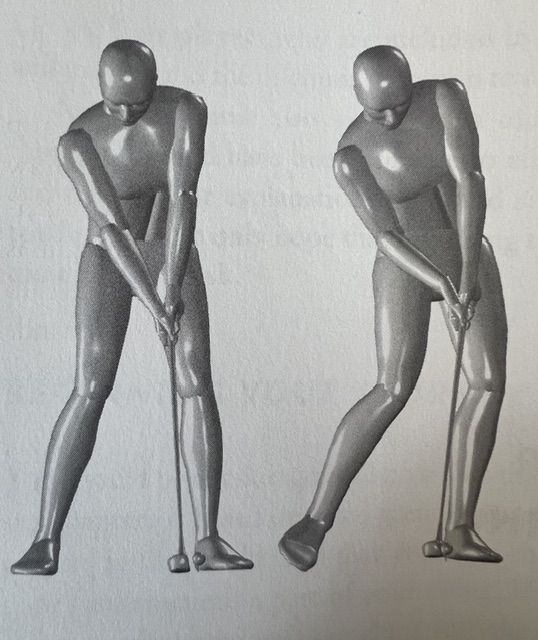
In the first comparison photo, the student uses a weak grip with the hands rotated to the left side of the shaft. This limits his ability to shift onto his left side and get his hands in front of the ball at impact. As a result, there is very little difference between his setup and impact positions.
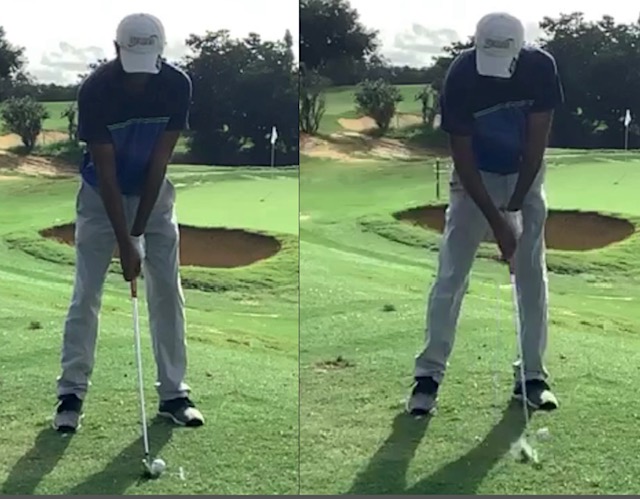
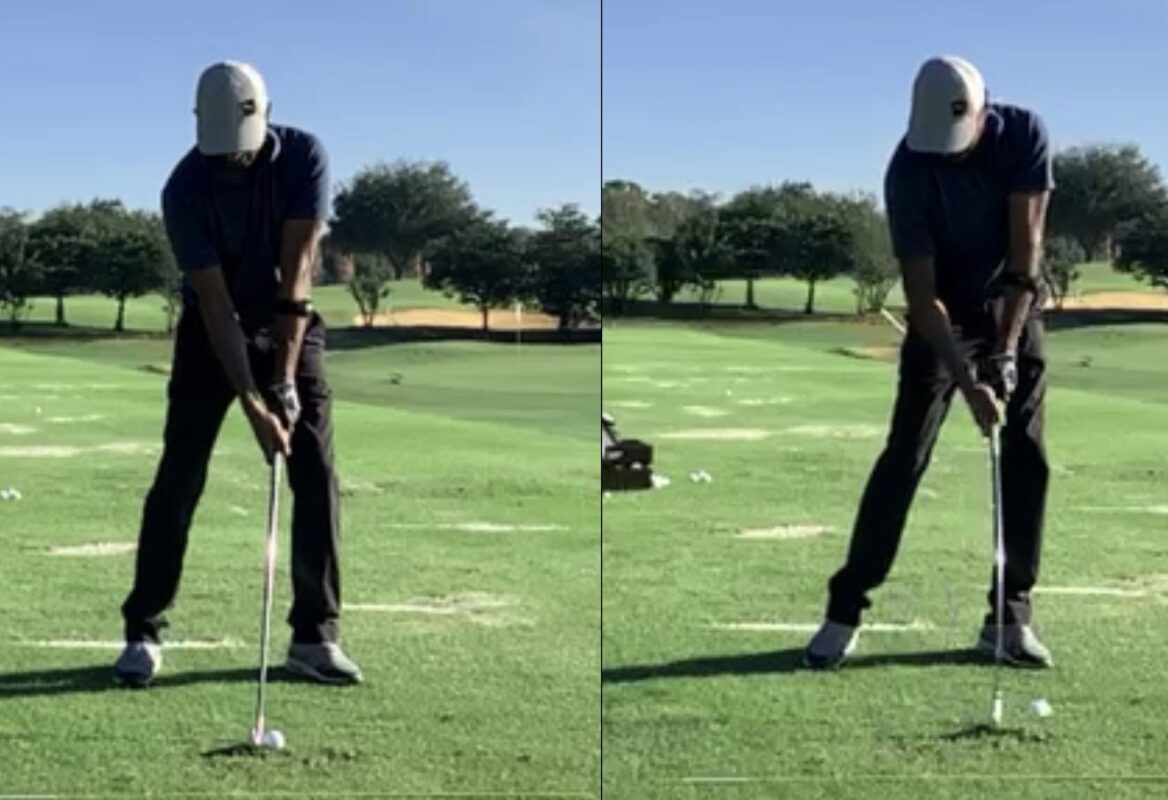
In the second comparison photo, the same student has adopted a stronger grip with the hands rotated to the right of the shaft. Notice how this promotes a stronger lower body shift toward the target and positions the hands more in front of the ball at impact. Not only does this reduce his tendency to slice, it produces a more dynamic lower body move that adds power to every shot.
How to Build a Proper Grip
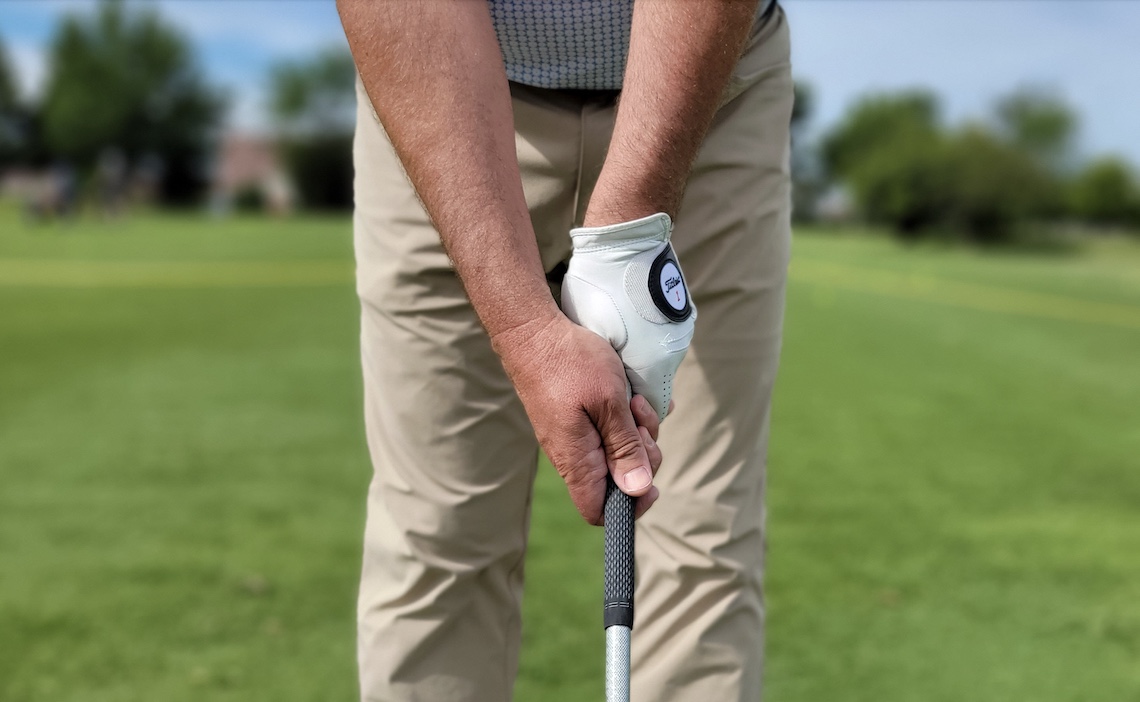
The best grip places both hands in a stronger position, and it is critical that the handle rests in the fingers — not in the palms.
The left hand is rotated more to the right in an active position, with the left thumb sitting slightly right of center on the shaft. The right hand is likewise rotated to the right, allowing the V formed between the thumb and forefinger to point toward the right shoulder. For both hands, keeping the handle in the fingers rather than the palm is essential.
The grip is completed by overlapping the little finger of the right hand on top of the ridge between the left index and middle fingers. This is known as the Vardon grip, and it is the one I recommend. It does the best job of bringing the hands close together and aligning the axes of both wrists so they work as a cohesive unit. Many players also use the interlocking grip, which is a solid alternative — as long as the handle remains in the fingers.
The Bottom Line
The foundation of a sound, repeatable swing starts with a good grip. Unlike many aspects of the golf swing, this is one area where you have complete control — you can take all the time you need to get it right before you ever take the club back. Start here, and everything that follows becomes easier.
Have questions or want to work on your grip in person? I offer private lessons and golf schools right here in Orlando. I’d love to help.
